CAWI, CWI, SCWI, and CWE: which welding-inspector credential you should register for
Quick answer
What is the difference between CAWI, CWI, SCWI, and CWE?
They are rungs and cousins on the American Welding Society ladder. Certified Associate Welding Inspector (CAWI) is the entry rung for those short on experience, Certified Welding Inspector (CWI) is the main credential, and Senior Certified Welding Inspector (SCWI) sits above it. Certified Welding Educator (CWE) is a separate teaching credential, not a rung.
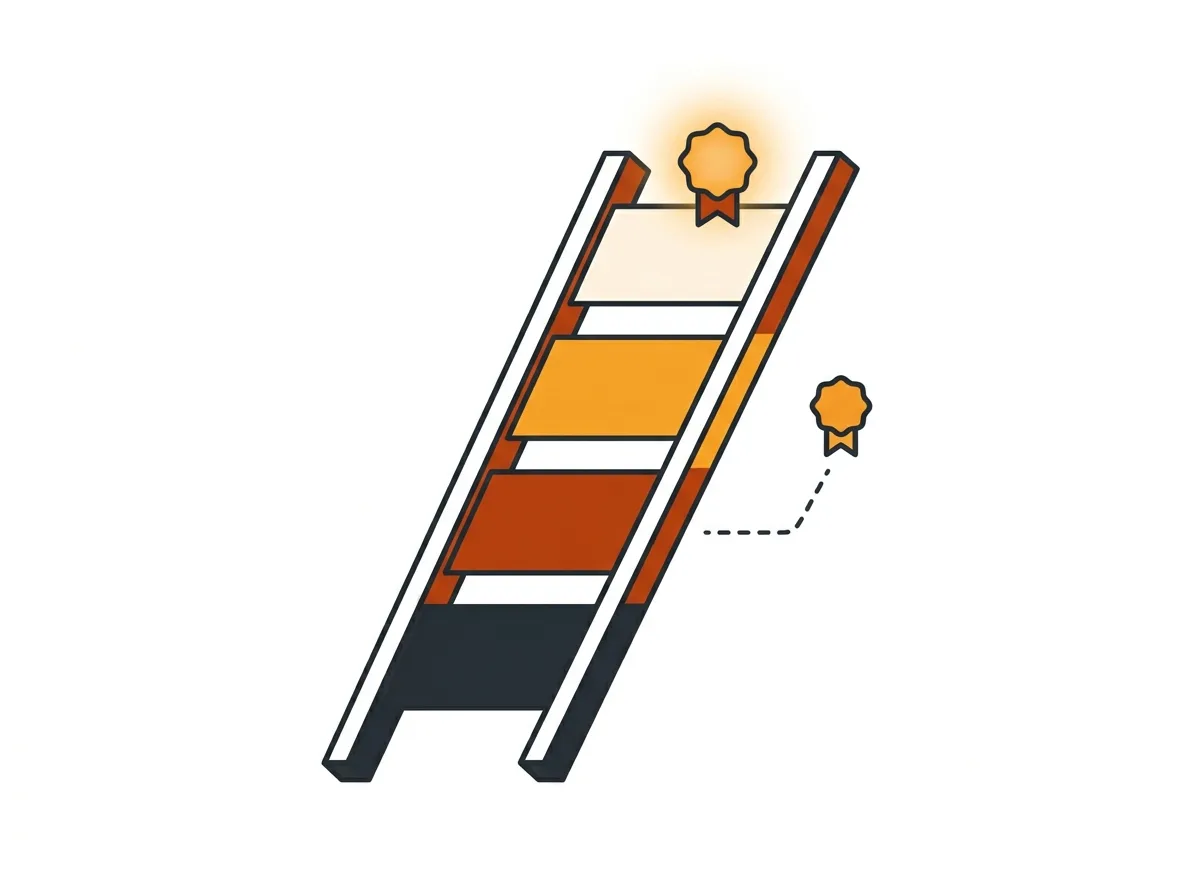
Before you register and pay, you have to pick the right credential, and the alphabet soup around the American Welding Society (AWS) inspector program makes that harder than it should be: CAWI, CWI, SCWI, CWE, CWEng, CRI. Register for the wrong one and you either pay for a credential you cannot yet qualify for, or you undersell yourself. This guide maps the ladder neutrally so you sit for the credential that actually fits where you are in the trade. We sell no prep, so we have no reason to push you up or down the ladder.
The one-line map
- CAWI, Certified Associate Welding Inspector: the entry rung, for people who can pass the exam but do not yet meet the full CWI experience requirement.
- CWI, Certified Welding Inspector: the main event, the credential the whole industry means when it says “get your CWI”.
- SCWI, Senior Certified Welding Inspector: the rung above CWI, for experienced inspectors who already hold the CWI and have substantial additional time.
- CWE, Certified Welding Educator: a separate teaching credential, not a step on the inspector ladder.
The first three (CAWI, CWI, SCWI) are the same inspection ladder at different experience levels. CWE is a cousin, and CWEng (Certified Welding Engineer) and CRI (Certified Radiographic Interpreter) are further-out relatives. Below is how to tell which one you should register for. Each rung and cousin also has its own full guide, linked from its section: this page is the map, those pages are the detail.
| Credential | What it is | Full guide |
|---|---|---|
| CAWI | Entry rung, assists under a CWI | CAWI guide |
| CWI | The main independent credential | CWI exam guide |
| SCWI | Top rung, program oversight | SCWI guide |
| CWE | Separate teaching credential | CWE guide |
| CRI | Radiography reading, recertifies your CWI | CRI guide |
CAWI: the entry rung
The Certified Associate Welding Inspector exists for a specific person: someone who can pass the exam parts but does not yet have the full welding-related work experience that CWI requires. You sit essentially the same exam material, but you are certified at the associate level because your documented experience is not there yet.
CAWI is not a consolation prize, it is a legitimate on-ramp. If you are early in the trade, it lets you certify now and step up to CWI later once your experience accrues, rather than waiting years to sit anything at all. But it is a real decision: if you do already meet the CWI experience bar, do not register for CAWI, because CWI is the credential employers ask for by name. Confirm your experience math before you choose, because the choice is made at registration. The full CAWI guide covers the experience thresholds, the identical exam fee, and the assist-versus-independent scope difference in detail.
CWI: the credential the industry means
The Certified Welding Inspector is the standard. When a job posting says “CWI required”, this is it, and it is the credential this whole site is built around. To sit for CWI you must meet a combination of education and documented welding-related work experience, and the two trade off against each other: more schooling reduces the years of experience required, less schooling increases them. In round terms, the requirement ranges from about one year of welding-related work experience with a relevant bachelor’s degree up to about twelve years with less than an eighth-grade education (checked against the AWS certification pages on 2026-07-23). Most candidates land somewhere in the middle: a two-year technical degree needs more experience than a four-year degree, a high-school diploma more than that.
The experience has to be in a welding-related occupation as AWS defines it, certified on your application, not simply any job at a shop that happens to weld. The single most common avoidable mistake is booking the exam and then discovering the documented experience does not add up the way you assumed. Confirm your specific case against the official application before you pay anything. The full exam structure, the three parts, and scoring are in the CWI exam guide.
SCWI: the rung above
The Senior Certified Welding Inspector sits above CWI and is for inspectors who already hold the CWI and have accumulated substantial additional experience. It is not a starting point: nobody registers for SCWI as a first credential. Think of it as the advancement you pursue years after your CWI, once your career and your documented time justify it. If you are reading this to decide what to register for now, SCWI is almost certainly not it, but it is the reason the CWI is worth treating as the foundation of a long inspection career rather than a one-and-done certificate. The full SCWI guide covers the six-of-eight-years CWI-tenure and fifteen-years experience bars, the four qualifier and coordination endorsement exams that make up the credential, and its cost.
CWE and the cousins: know they exist, do not confuse them
- CWE, Certified Welding Educator: for people who teach welding. It is a separate credential with its own requirements, not a rung on the inspector ladder. It uses the CWI Part A and Part B exams but not the Part C code exam. If your goal is inspection, CWE is not your path; if your goal is teaching, it is a different application entirely. See the full CWE guide.
- CWEng, Certified Welding Engineer: an engineering-level credential, further from the inspector path.
- CRI, Certified Radiographic Interpreter: a specialist radiography-reading credential. It matters to CWIs for one practical reason: holding the CRI is one of the four routes to satisfy your nine-year CWI recertification. The full CRI guide covers its exam, its $1,005 member fee, and that recert double-duty, and the recertification guide ranks it against the other three routes.
How to pick, in order
- Do you meet the CWI experience requirement? Check the official education-and-experience table for your exact case. If yes, register for CWI. If no, CAWI is the on-ramp.
- Are you already a CWI with years of additional experience and a reason to advance? Then SCWI is the conversation, later, not now.
- Is your actual goal teaching or engineering, not inspection? Then CWE or CWEng is a different application, and this ladder is not yours.
- Do not over-buy the credential. Registering for CWI when your experience clearly does not qualify wastes money and time; registering for CAWI when you do qualify for CWI undersells you to employers. The choice is made at registration, so get it right first.
Once you have chosen, price the whole path with the cost calculator, see the itemized cost table, and, if a specific industry is your target, check whether a code endorsement belongs in your plan from the start.
Sources: the AWS Certified Welding Inspector, Associate, Senior, Educator, and Radiographic Interpreter certification pages at aws.org (reviewed 2026-07-24). The CAWI, CWI, and SCWI ladder, the CWE and CWEng credentials, the CRI, and the education-and-experience requirements are set by the American Welding Society and can change; the experience ranges here are rounded, and you must confirm your exact education-and-experience case against the official application before you register or pay. This site is independent, is not affiliated with AWS, and sells no seminar, course, or exam seat.